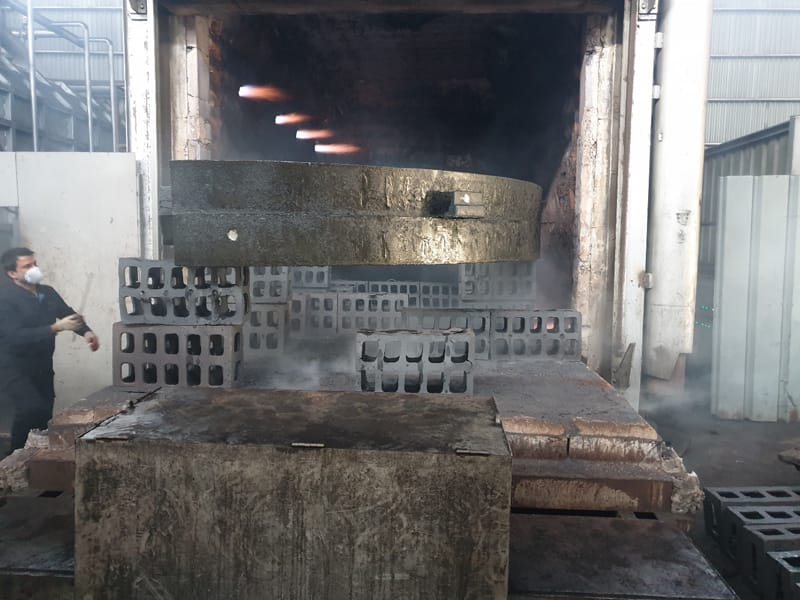
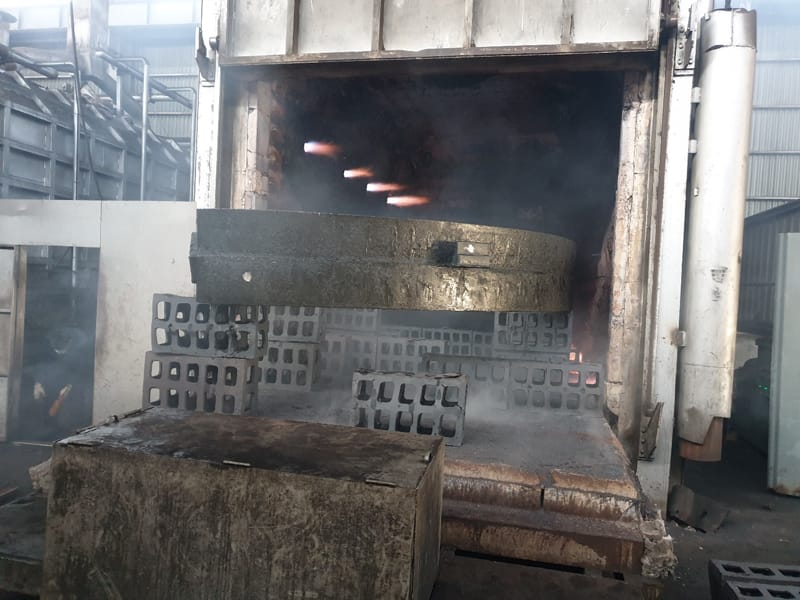
After-treatment of a cast part with the use of temperature is mostly used to have an impact on the characterstics of the material. According to the chosen process we can adjust the quality of the cast to the requirements of the operating area. Especially cast steel preserves its exceptional mechanical features through thermal processes: So with tempering, normalising and annealing we can receive better solidity. Normalising and annealing give higher hardiness. The residual stress in steel cast lowered through low-tension annealing and steel with a carbon share of more than 0.4 per cent is better cut when processed via annealing.
Next to this we can with heat, controlled quenching or cooling influence the composition of the alloy compounds of the material. Also, here the after-treatment aims at the adjustment of the material characteristics to the target of the specific cast part.
Within the after-treatment of casts we are conducting the following heat treatment methods:
- Low-tension annealing
- Normalising
- Annealing
- Ferritise
- Isothermal annealing
- Air hardening and tempering
- Oil and water quenching and tempering
- Hardening
Have a question?
Get in touch.

Our Supply Services
Material Consulting
We can make the right decision together with you As regards to mechanical and chemical characteristicswe consider the following:
Pattern Construction
The following principle applies for us: a casting can only be as good as the mould which is used for the production of it. Our qualified builders will make an exact model for your desired casting

Moulding Process
The basis for this is among others our broad range of production processes for castings. According to the extent of your order and according to the product-specific requirements
Mechanic Treatment
Besides the production of casts their further processing in a high-quality manner is a pivotal part of the service portfolio of our foundry.